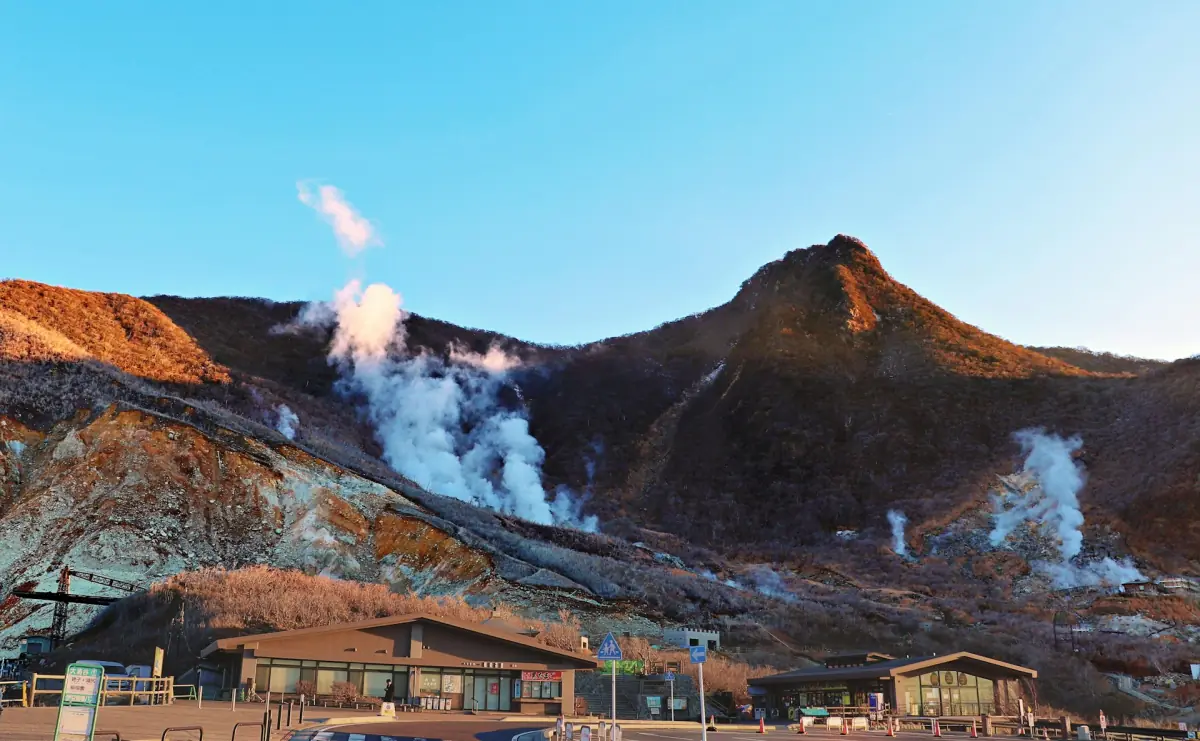
Owakudani weather and choosing a visiting season
Owakudani weather matters when choosing a season because the visit combines an exposed volcanic landscape with transport that can stop in difficult conditions. Start with what you want to do: see the valley from the public visitor areas, travel by ropeway or join the separately reserved nature trail. Those activities have different operating constraints. A promising month does not settle the conditions for any particular departure or viewpoint.
The Japan Meteorological Agency’s climate normals for 1991 to 2020 provide a long-term comparison. Hakone’s table supplies rainfall values, while nearby Odawara supplies both rainfall and temperature values. Odawara’s temperatures describe that station, not the elevated Owakudani visitor area. Use the figures to understand regional seasonality, and use the day’s forecast and operating information for the actual visit. The visitor overview helps choose which parts to prioritise.

Rainfall patterns: winter is relatively drier
In the Hakone normals, December has the lowest mean monthly rainfall at 107.9 mm, while September has the highest at 448.7 mm. January averages 127.7 mm and February 151.3 mm. These figures support describing winter as relatively drier in the long-term record. They do not turn a winter booking into a promise of dry paths, a clear mountain view or a running ropeway.
The wetter part of the comparison includes June at 420.4 mm, July at 425.3 mm and October at 403.8 mm for Hakone. Think about how much of your plan depends on being outdoors and how readily you can change the day’s order. Keep the transport route available independently of a particular sightseeing sequence. A flexible visit can retain useful options when conditions change after arrival.
Plan a day out
This guided trip is an option when choosing a date for an Owakudani visit.
Hand-picked tours, booked through Viator. Prices are indicative starting prices in US dollars (as of October 2026). Tap a tour for live availability and the current price in your currency.

An organised visit through Hakone
Travel with a vehicle and guide; the ropeway ticket is a limited-time offer. Choose the date by its actual inclusions and operating conditions.
Autumn foliage at Owakudani
The ropeway operator gives late October to mid-November as the usual autumn foliage period. This is a seasonal guide rather than a prediction for the colour of the slopes on a specific date. Different places within Hakone should not be treated as one simultaneous display. Plan the valley and the ropeway as the main visit, with autumn colour as a seasonal feature whose timing can vary.
November’s Hakone rainfall normal is 197.1 mm, compared with October’s 403.8 mm. Use the comparison as context and consult current conditions for the morning’s weather and the progress of the leaves. If the autumn landscape is your priority, leave room in the itinerary for current conditions instead of attaching the whole visit to a promised foliage day. Choose a Hakone base whose connections suit the rest of your stay too.
Winter hours and views of Mount Fuji
The ropeway’s listed hours are 09:00 to 17:00 from February to November and 09:00 to 16:15 in December and January. The shorter winter day of operation affects both outward sightseeing and the return connection. Work backwards from the transport you need after Owakudani, leaving time for changing ropeway sections and continuing through Hakone. See the ropeway page for the route rather than treating the closing time as an invitation to arrive at the last moment.
The operator describes clear weather as necessary for a Mount Fuji view. A drier monthly average does not provide a visibility probability. Clouds and steam also shape the experience of the valley itself, so decide whether the volcanic landscape is enough reason for your visit if the mountain remains hidden. The excursion shown here offers a vehicle and guide, while its ropeway ticket is described as a limited-time offer. Check the selected date’s inclusions; neither a seasonal operation nor a Fuji view is promised.
Nature-trail weather and daily decisions
The nature trail can be cancelled for rain, strong wind, fog, ice or snow, thunderstorms, elevated gas levels and volcanic changes. The operator usually makes a decision 30 minutes before a session and may also stop it after departure. A reservation therefore needs a flexible plan around it. Read the participation conditions before choosing a session, since weather is only one part of eligibility.
For the ropeway, strong winds, thunderstorms, typhoons and elevated gas readings can interrupt operation. Volcanic warning levels and gas readings are not directly coupled. Check the live service information before leaving your base and again before relying on the final connection. Keep meals, egg shopping and any onward transport in a workable order, and follow staff instructions about accessible areas. A seasonal plan is most useful when it leaves room for these local decisions.
Questions about your visit
When is autumn colour usually expected?
The ropeway operator gives late October to mid-November as the usual period. The actual timing varies.
Are the temperatures in the regional table Owakudani temperatures?
The temperature normals are for Odawara. Hakone’s cited normal table provides rainfall, not a local temperature series.
Does a drier winter guarantee the ropeway?
Wind, weather and gas conditions can interrupt service. December and January also have shorter listed operating hours.