Owakudani history begins with the landscape
Owakudani history is written into the northern slopes of Kamiyama in the Hakone volcanic area. The valley is a fumarole field in Hakone, Kanagawa Prefecture, with Kanmurigatake rising behind it. The municipal geopark explains its formation through the collapse of Kamiyama’s northern side roughly 3,000 years ago and the ascent of lava. It is more useful to read the landscape as the result of several processes than to imagine one open crater containing everything visible today.
The fumes and bare ground belong to that geological story. Fumaroles contain hydrogen sulphide, while acidic soils and gases favour specialised plant communities and cause other woody plants to die back. This helps explain the contrast between the exposed valley and surrounding vegetation. Observe it from the designated visitor areas rather than treating the pale ground as an invitation to explore. The Owakudani overview introduces the viewpoints and the relationship between the station and the valley.

From Daijigoku to Owakudani in 1873
The older name was Daijigoku, written 大地獄. According to the municipal geopark’s historical account, the name changed to Owakudani, 大涌谷, on the occasion of the imperial visit in 1873. That change belongs to the human history of how the volcanic site was presented and visited. The steam remained part of the place even as the name used to describe it changed.
Keeping the old and new names together makes the site easier to understand. Daijigoku evokes a very different impression from a modern station viewpoint, yet both refer to the same volcanic setting. The historical station photograph used for this page is another reminder that visitor infrastructure has changed. It should be read as a view of an earlier station, rather than a picture of the facilities awaiting visitors now.
See the valley
This private visit provides transport to Owakudani, where you can see the volcanic landscape discussed on this page.
Hand-picked tours, booked through GetYourGuide. Prices are indicative starting prices in US dollars (as of October 2026). Tap a tour for live availability and the current price in your currency.

Visit the volcanic valley by private vehicle
A private van with driver-guide, hotel transfer within Tokyo’s 23 wards and return Owakudani ropeway tickets offers a way to visit the landscape described here.
Thermal water and the development of visitor access
Large-scale thermal-water supply by Hakone Onsen Kyokyu dates to 1933 in the geopark account. This milestone concerns a particular supply operation; it is not the starting date of every use of hot water across Hakone. At Owakudani, the connection between volcanic heat, water and infrastructure is part of the landscape’s human story, alongside the more immediately visible fumes.
A small eruption occurred in 2015. Access to the nature trail resumed under special measures in 2022. These dates describe a changing relationship between volcanic activity and visitor access, rather than a promise that every path is available today. The reserved nature trail has its own participation rules and safety supervision. Read the nature trail and access guide before including it in a visit; a historical reopening date is different from the operating decision for a particular departure.
What to learn at the Hakone GeoMuseum
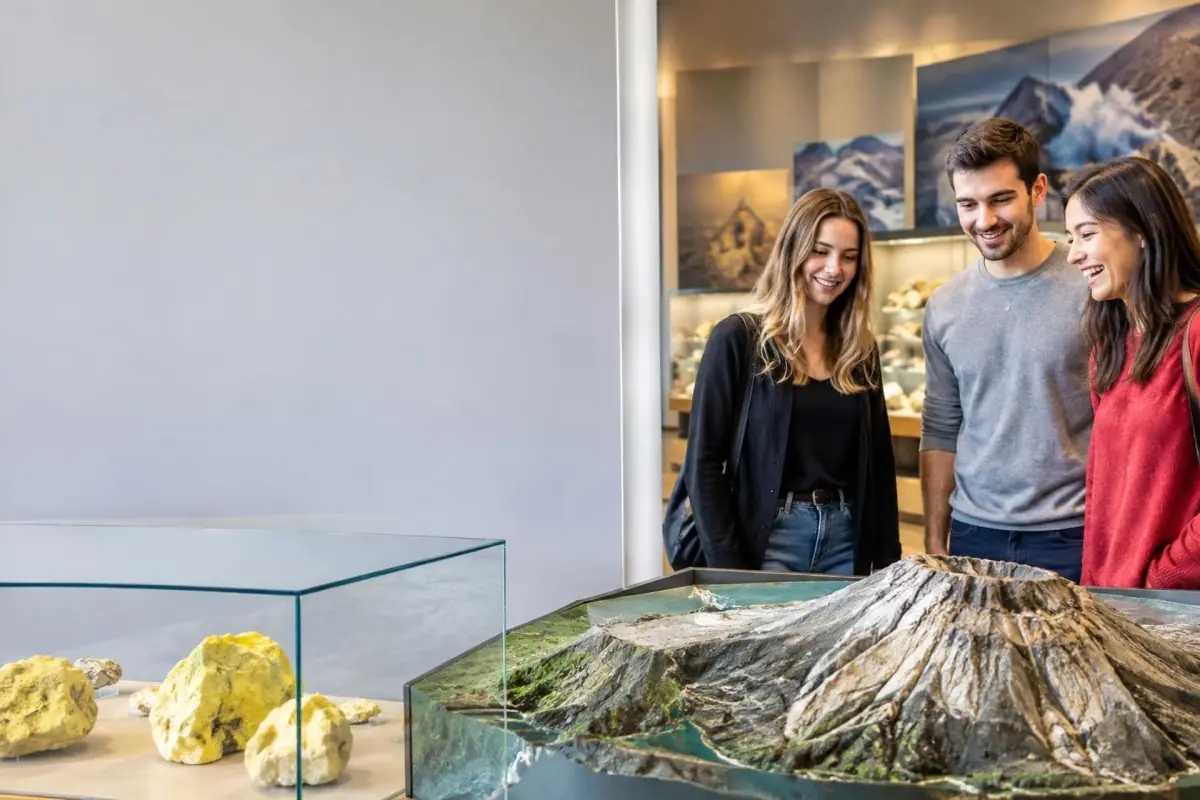
The Hakone GeoMuseum is on the ground floor of the Kurotamago hall. Its subjects include volcanic formation, geology and thermal-water supply, making it a useful stop for connecting the wider landscape with the pipes and steam seen outside. Approach the visit with those themes in mind: how the land formed, how volcanic heat is used and how people have organised access to it.
The museum lists opening hours of 09:00 to 16:00, with weather-related closure possible. Its information zone is free, while the GEO Hall charges 100 JPY for adults and 100 JPY for children; preschool children enter free. These are museum arrangements, separate from transport and nature-trail costs. The pass and visitor costs page explains how to keep those items separate when planning a day.
Local stories and the station renewal of 2025
Enmei Jizo stands near the nature-trail entrance according to the local facility information. The association with Kobo Daishi is told as a tradition. The familiar claim that one black egg adds seven years to a life belongs to local legend, not to a demonstrated health benefit. That cultural layer sits alongside the geological story without replacing it. The black eggs guide covers the food, its production and the story in more detail.
The station area’s Chikyu no Tani development was announced in March 2025, with viewing spaces including Kaze no Wa Terrace, Ibuki no Deck and Ozora no Hotori. These visitor spaces are separate from the reserved nature trail. Together, museum interpretation, renewed station views and controlled trail access offer different ways to understand the valley. A private visit with a driver-guide and return ropeway tickets provides transport to this setting; specialised museum admission and a dedicated history lecture are separate matters.
Questions about your visit
When did Owakudani receive its present name?
The municipal geopark dates the change from Daijigoku to Owakudani to the imperial visit in 1873.
What happened in 2015?
A small eruption occurred. Nature-trail access later resumed under special measures in 2022.
Where is the GeoMuseum?
It is on the ground floor of the Kurotamago hall, with exhibits on volcanic formation, geology and thermal-water supply.