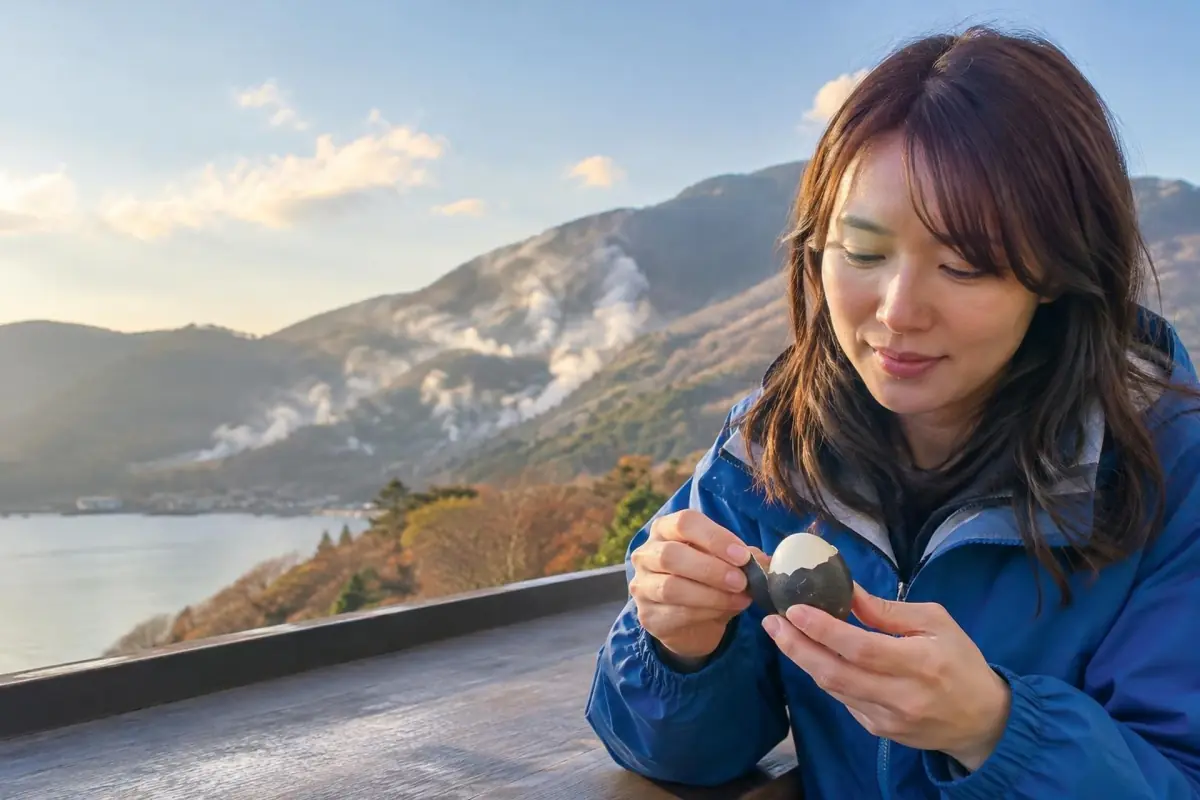
Black eggs in Hakone: what makes the shell dark
The black eggs of Hakone in Japan are ordinary eggs transformed on the outside by the thermal environment at Owakudani. Their dark shells result from a chemical reaction with components of the hot water and volcanic gases. The colour belongs to the shell; it does not mean the inside of the egg is black or that a special breed produces it. This makes the eggs a tangible connection between a familiar food and the unfamiliar landscape around the visitor area.
Treat the egg stop as part of a wider visit rather than a reason to enter the steaming ground. The baskets and pools used in production are working facilities, not places for visitors to prepare food. The public viewpoints, shops and separately managed paths serve different purposes. The Owakudani overview explains how those parts fit together before you decide what to include.

How the eggs are made and sold
The hall operator describes production as a hot-water stage at approximately 80 °C for 60 minutes, followed by steam treatment at approximately 100 °C for 15 minutes. These are descriptions of the commercial preparation process. They are not instructions for trying it yourself in the volcanic area. Seeing steam beside the production equipment also does not mean there is a visitor workshop or a hands-on cooking activity.
At the operator’s information checked on 3 November 2026, a pack of four eggs costs 500 JPY including tax. That is the price of the pack, separate from transport and other visit costs. The operator names the Kurotamago hall and Gokuraku-chaya as sales locations and says fresh eggs are sold on the day they are made. If the eggs are your priority, plan the shopping stop while keeping your onward journey in view.
Visit Owakudani
This guided bus trip offers a way to visit the area associated with black eggs.
Hand-picked tours, booked through GetYourGuide. Prices are indicative starting prices in US dollars (as of October 2026). Tap a tour for live availability and the current price in your currency.

Visit Owakudani by bus and ropeway
This Tokyo day trip includes the ropeway and an Owakudani stop. Buy black eggs separately during your visit.
Sales hours and a practical stop
Egg sales are listed from 09:00 to 16:40, while the KurotamaSHOP hours are 09:00 to 16:30. Seasonal changes and sell-outs are possible. Arriving near the end of sales therefore leaves less room to adjust than putting the stop earlier in your visit. Match the shop hours to the ropeway operating hours, especially when returning through several transport connections.
The day-trip option on this page visits Owakudani and includes a ropeway ticket, a tour bus and a guide, with a meeting-point start at Tokyo Station or Shinjuku Station according to the option. Eggs are a separate purchase. Lunch and the Lake Ashi cruise ticket are extra as well. Compare the complete journey on the Owakudani tours page if you want an organised route from Tokyo.
The Enmei Jizo legend
The story that eating one egg adds seven years to your life is a local legend. It belongs to the cultural setting of Enmei Jizo and should be understood as a story, rather than a health benefit attached to the food. The operator places Enmei Jizo near the nature-trail entrance and recounts a tradition connected with Kobo Daishi. This gives the egg stop a cultural context beyond the unusual colour.
Keep a moment at the Jizo separate from the practical business of buying food. It is a religious reference point, not an attraction whose meaning is explained by a nutritional claim. For the landscape’s older names and the development of the visitor area, continue with Owakudani’s history. The egg tradition is one strand of that broader story.
Eating at Owakudani
The Kurotamago hall offers a café and fast-food setting rather than a lunch buffet. If you are planning a full meal, make that distinction before building the day around an older buffet description. The station has a separate restaurant, OWAKUDANI KITCHEN, which opened on 17 July 2026. The station restaurant and the hall café are different facilities, so an egg purchase should not stand in for planning your meal break.
A workable sequence is to settle your transport, visit the accessible viewpoints, buy eggs during sales hours and then decide where the food break fits. Reserve the nature trail separately if it is part of your plans and you meet its participation conditions. A tour’s Owakudani stop is not a nature-trail reservation. The nature-trail guide covers the separate access rules.
Questions about your visit
How many eggs are in a pack?
The operator listed four eggs for 500 JPY including tax when checked on 3 November 2026.
Does the tour include the eggs?
The tour includes transport and a ropeway ticket. Allow separately for eggs and lunch.
Does an egg add seven years to your life?
Seven extra years is the local Enmei Jizo legend, not a medical claim.